The Parasites They Told You Weren't Here
Something is happening in America that almost no one is testing for...
You have been taught your whole life that parasites are a foreign problem. Something you catch from bad water in a faraway place. Something that happens to other people, in other countries, not to someone like you, in a country like this.
That belief runs so deep that your doctor has almost certainly never tested you for one. Not at a physical. Not when you were exhausted for no reason. Not when your gut was a wreck for months and every result came back "normal."
Here is what makes that strange. The CDC's own files say tens of millions of Americans are carrying them right now.
If no one has ever checked you for this, that is not your failure. It is by design. Let me show you how.
What is actually here
In 2014, the CDC did something quietly remarkable. It created a brand new category for a group of infections it admitted had been ignored in this country for decades. The name it chose says everything: Neglected Parasitic Infections.
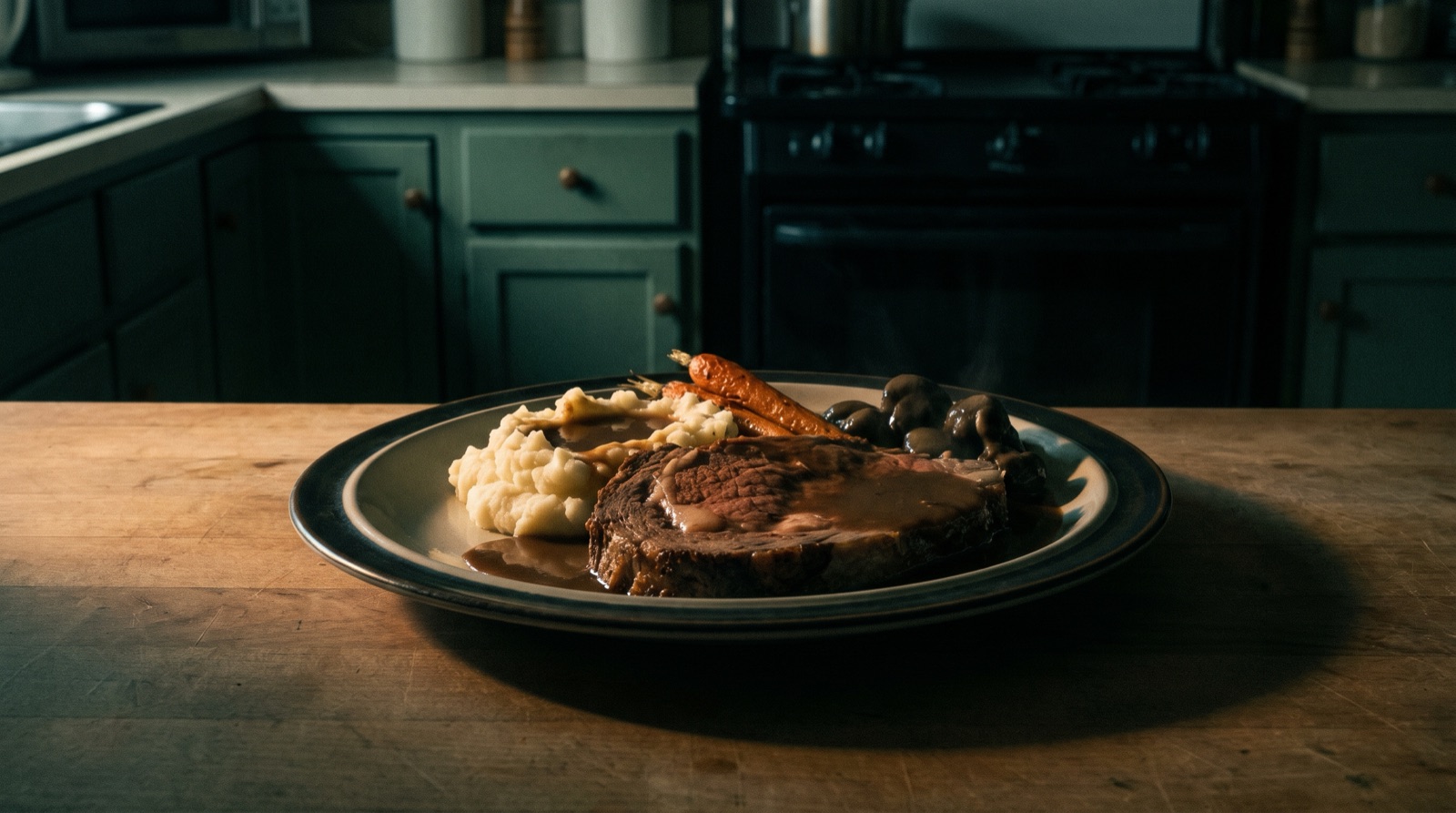
More than 40 million Americans carry Toxoplasma. You pick it up from undercooked meat, unwashed greens, or a cat's litter box. Most people never feel a thing. And it does not leave. It settles into your tissue, including your brain, and forms microscopic cysts that sit there, dormant, for the rest of your life.
In more than forty million American skulls, right now, a parasite is parked in tiny cysts, quiet, permanent. Nobody screened for it. Nobody will.
An estimated 40 million more carry pinworm. It is the most common worm infection in the country, and it lives in households and classrooms. At night, while a child sleeps, the female worm crawls out to lay thousands of eggs on the skin. That is the itch. By morning the eggs are on hands, sheets, doorknobs, and the next person.
Roughly 1 in 7 Americans has been exposed to Toxocara, the roundworm your dog and cat carry. Its eggs live in soil, sandboxes, and backyards. In people, the larvae wander, and every year they migrate into the eyes of dozens of American children and take their sight.
3.7 million have trichomoniasis, the most common curable infection of its kind in the country, and most people carrying it have no symptoms at all.
More than 300,000 carry the parasite behind Chagas disease. It can live inside you silently for twenty or thirty years while it slowly scars your heart.
And those are only the five that earned a name. Giardia, the single most common intestinal parasite diagnosed in the United States, did not even make the list.
None of these are exotic. Not one. They are in the meat, the salad, the soil, the pets, and the people around you. They are common, they are here, and most of the people carrying them will never know.
The proof, in the system's own words
I want to be clear that none of this is my theory. The most damning testimony comes from the CDC itself. On May 8, 2014, the agency put out a public announcement titled "Parasitic Infections also occur in the United States," naming five of them a neglected priority right here at home. Every word I am about to quote comes from that document.
In it, the CDC's own director said these infections are, and I am quoting, "more common in the US than people realize."
In that same 2014 announcement, the CDC wrote that doctors "are often unfamiliar with these parasitic infections, and therefore may not diagnose or treat them appropriately."
The nation's top health agency is stating, on the record, that the very doctors you trust to catch this were never trained to look for it.
The CDC even named the cause. The obstacle, it said, is "the perception that parasitic diseases are no longer relevant or important." A perception. Not a finding. A story the system told itself for so long that it hardened into fact.

Why they stopped looking
So how does an entire country convince itself that tens of millions of infections simply do not happen here?
You follow the money, the way I always do. And when you do, you find something worse than a cover-up. You find a loop, running quietly, that guarantees the truth never surfaces.
Here it is, step by step.
One. A dewormer is one of the oldest, cheapest medicines on earth. Most are off-patent. No company can own them, so no company will fund the trials, the studies, or the awareness campaigns.
Two. No funding means no new research. No new research means the treatment guidelines never get updated, and the topic never gets louder.
Three. With nothing new to teach, medical schools file parasites under "solved, foreign, rare." A paragraph in a textbook. Not something to suspect in an American exam room.
Four. A doctor who was never trained to suspect it does not order the test. And the tests that exist are finicky and rarely stocked, so even the curious ones give up.
Five. No test means no diagnosis. No diagnosis means the case never enters the official numbers.
Six. And when the numbers stay low, everyone points at them and says, "See? It's rare here." Which loops straight back to step one.
Nobody in that chain is lying. That is exactly what makes it so hard to see. The system did not bury the truth in a vault. It built a loop that guarantees it never has to look, and then it mistook its own blind spot for good news.
And I want to say this plainly, because it matters. This is not your doctor's fault. Your doctor was trained inside that loop. They are practicing exactly the medicine they were handed. The failure sits far upstream of the exam room, with the people who decide what gets studied, taught, and paid for, and who quietly benefit when the answer is "nothing to see here."
Who this is actually about
If you are picturing someone else right now, stop.
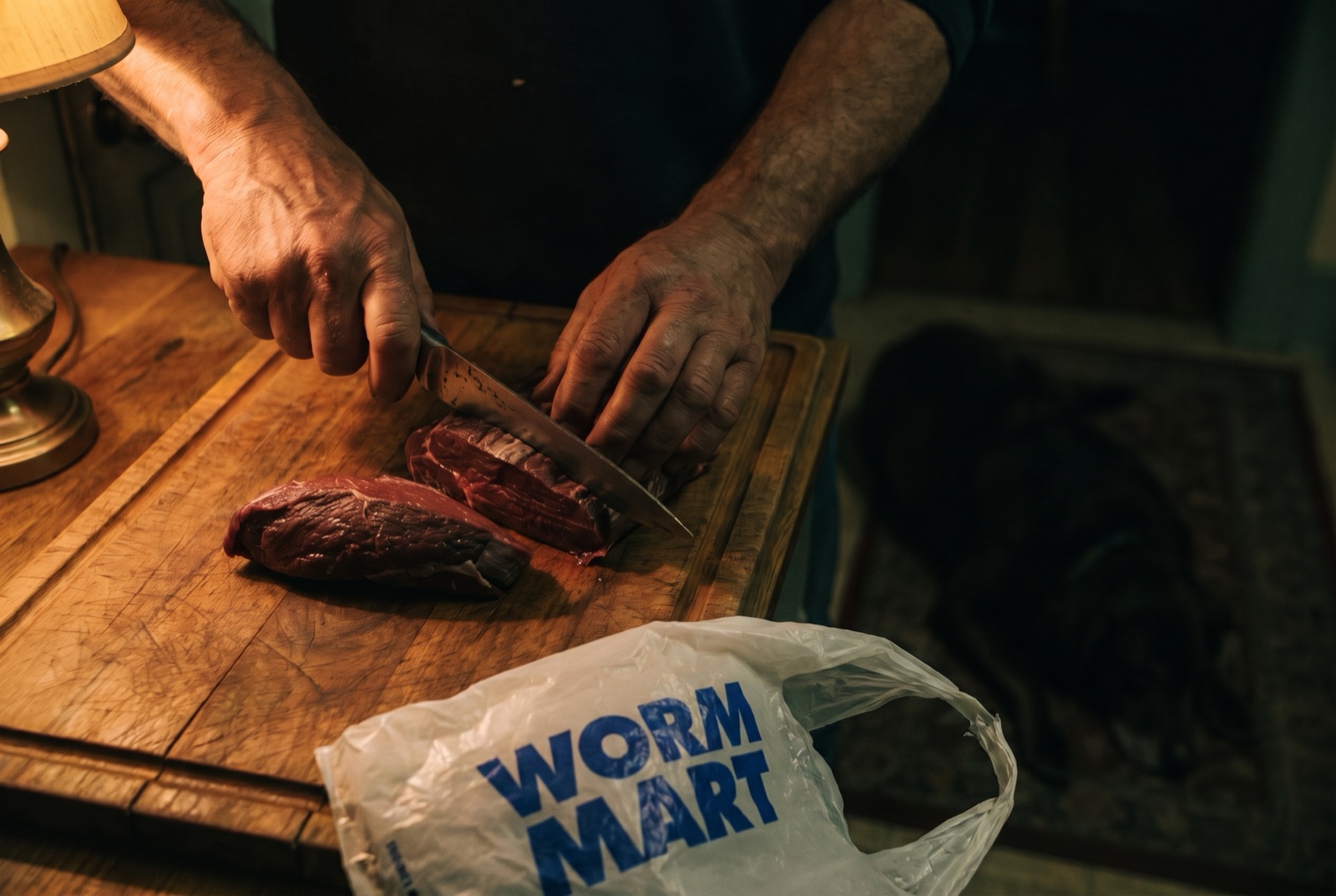
You eat food grown in soil and handled by human hands. You eat meat that is not always cooked all the way through. You have a dog that licks your face, or a cat with a litter box, or grandkids who touch everything and then their mouths. You live in a country whose food travels farther, through more hands, than any food in human history.
Not from a slum. Not from bad water on another continent. From your kitchen. From your pet. From your own backyard.
And if a parasite outbreak still sounds like something that happens on another continent, you have simply forgotten the last decade here. The same names you trust with dinner have already carried these through their own shelves and menus:
-
2013 · Olive Garden & Red Lobster. The FDA tied a Cyclospora outbreak to a salad mix served at both chains, part of a national wave that sickened at least 400 people across 16 states that summer.
-
2017 · Costco. Shoppers filmed live worms wriggling in wild salmon, months after the CDC's own journal confirmed Alaskan salmon can carry a tapeworm once thought to live only in Asia.
-
2018 · McDonald's. Cyclospora in the salads sickened 511 people across 15 states and forced salads off the menu at roughly 3,000 restaurants.
-
2018 · Del Monte trays (Kwik Trip, Sentry, Country Market). The same parasite, 250 more people sick.
-
2019 · Publix. Basil pulled from shelves after a Cyclospora outbreak reached 132 people in 11 states.
-
2020 · ALDI, Walmart, Hy-Vee, Jewel-Osco. Fresh Express bagged salads sickened 701 people across 14 states; 38 were hospitalized.
This is not just history. As I write this, another Cyclospora outbreak is spreading across more than thirty states.
And every number you just read is only what got counted. Each figure is the handful of people sick enough to reach a doctor, sharp enough to be tested, in a lab equipped to confirm it. By the CDC's own account these infections are underdiagnosed and underreported, which means the real totals run far higher than any list. Hold that against the anchor: more than forty million Americans already carry just one of these, quietly, uncounted. The outbreaks are not the disease. They are the rare moment it surfaces long enough to make the news, for about a week.
And food is only one door in. The parasite behind most of the country's waterborne outbreaks shrugs off pool chlorine and surfaces every summer in public pools and children's splash pads. The roundworm dogs leave in the grass seeds the soil of parks and playgrounds. This is not the developing world. It's in America.
Then the country does what it always does. It moves on. Ask the people around you if they remember the summer McDonald's pulled its salads over a parasite. Almost no one will. That was not a foreign problem. That was lunch.
And here is the part that should bother you most. We are more exposed than our grandparents were, and we are far less protected. Because somewhere along the way, we quietly threw out the one defense every generation before us kept.

What we forgot
For almost all of human history, people did not wait for a parasite to make them sick. They ate against it, on purpose.
Nearly every traditional culture on earth built bitter, pungent, cleansing foods and herbs into the everyday diet. Not as medicine you reached for once you were ill, but as a standing defense you ate to stay well in the first place.
And among all of them, there was one the ancient world trusted above the rest. Dioscorides, whose pharmacopeia shaped Western medicine for fifteen hundred years, catalogued it by name and listed it among the remedies to drive out worms. Healers across the Greek, Roman, and Islamic worlds reached for it the same way, century after century.
They took it seriously because they had no choice. They lived close to their food, their animals, and their soil. They had no lab, no prescription, and no comforting story that the problem had gone away.
Then the modern world arrived. It stripped the bitterness out of our food, handed the whole question to a medical system that had decided to stop asking it, and let us forget the name our ancestors never would have.
We did not outgrow the threat. We disarmed ourselves, and we called it progress.

What comes next
So I went looking for the one our ancestors trusted most. I read what the old physicians actually wrote. I read what modern researchers are quietly finding. And I learned what separates the real thing from the cheap imitations flooding the shelves.
Then we built something around it.
That is a story for the coming days. For now, I only needed you to know the part almost no one will tell you. This was never a foreign disease. It is an American blind spot, and you have been standing in it your whole life.
Keep an eye on your inbox. What I show you next changes how you think about your own body.
To your health,
Antonio
CEO, Black Forest Supplements
This article is for education. It is not medical advice, and nothing here is intended to diagnose, treat, cure, or prevent any disease. If you are concerned about your health, talk with your doctor.

Something is happening in America that almost no one is testing for...
You have been taught your whole life that parasites are a foreign problem. Something you catch from bad water in a faraway place. Something that happens to other people, in other countries, not to someone like you, in a country like this.
That belief runs so deep that your doctor has almost certainly never tested you for one. Not at a physical. Not when you were exhausted for no reason. Not when your gut was a wreck for months and every result came back "normal."
Here is what makes that strange. The CDC's own files say tens of millions of Americans are carrying them right now.
If no one has ever checked you for this, that is not your failure. It is by design. Let me show you how.
What is actually here
In 2014, the CDC did something quietly remarkable. It created a brand new category for a group of infections it admitted had been ignored in this country for decades. The name it chose says everything: Neglected Parasitic Infections.
More than 40 million Americans carry Toxoplasma. You pick it up from undercooked meat, unwashed greens, or a cat's litter box. Most people never feel a thing. And it does not leave. It settles into your tissue, including your brain, and forms microscopic cysts that sit there, dormant, for the rest of your life.
In more than forty million American skulls, right now, a parasite is parked in tiny cysts, quiet, permanent. Nobody screened for it. Nobody will.
An estimated 40 million more carry pinworm. It is the most common worm infection in the country, and it lives in households and classrooms. At night, while a child sleeps, the female worm crawls out to lay thousands of eggs on the skin. That is the itch. By morning the eggs are on hands, sheets, doorknobs, and the next person.
Roughly 1 in 7 Americans has been exposed to Toxocara, the roundworm your dog and cat carry. Its eggs live in soil, sandboxes, and backyards. In people, the larvae wander, and every year they migrate into the eyes of dozens of American children and take their sight.
3.7 million have trichomoniasis, the most common curable infection of its kind in the country, and most people carrying it have no symptoms at all.
More than 300,000 carry the parasite behind Chagas disease. It can live inside you silently for twenty or thirty years while it slowly scars your heart.
And those are only the five that earned a name. Giardia, the single most common intestinal parasite diagnosed in the United States, did not even make the list.
None of these are exotic. Not one. They are in the meat, the salad, the soil, the pets, and the people around you. They are common, they are here, and most of the people carrying them will never know.
The proof, in the system's own words
I want to be clear that none of this is my theory. The most damning testimony comes from the CDC itself. On May 8, 2014, the agency put out a public announcement titled "Parasitic Infections also occur in the United States," naming five of them a neglected priority right here at home. Every word I am about to quote comes from that document.
In it, the CDC's own director said these infections are, and I am quoting, "more common in the US than people realize."
In that same 2014 announcement, the CDC wrote that doctors "are often unfamiliar with these parasitic infections, and therefore may not diagnose or treat them appropriately."
The nation's top health agency is stating, on the record, that the very doctors you trust to catch this were never trained to look for it.
The CDC even named the cause. The obstacle, it said, is "the perception that parasitic diseases are no longer relevant or important." A perception. Not a finding. A story the system told itself for so long that it hardened into fact.
Why they stopped looking
So how does an entire country convince itself that tens of millions of infections simply do not happen here?
You follow the money, the way I always do. And when you do, you find something worse than a cover-up. You find a loop, running quietly, that guarantees the truth never surfaces.
Here it is, step by step.
One. A dewormer is one of the oldest, cheapest medicines on earth. Most are off-patent. No company can own them, so no company will fund the trials, the studies, or the awareness campaigns.
Two. No funding means no new research. No new research means the treatment guidelines never get updated, and the topic never gets louder.
Three. With nothing new to teach, medical schools file parasites under "solved, foreign, rare." A paragraph in a textbook. Not something to suspect in an American exam room.
Four. A doctor who was never trained to suspect it does not order the test. And the tests that exist are finicky and rarely stocked, so even the curious ones give up.
Five. No test means no diagnosis. No diagnosis means the case never enters the official numbers.
Six. And when the numbers stay low, everyone points at them and says, "See? It's rare here." Which loops straight back to step one.
Nobody in that chain is lying. That is exactly what makes it so hard to see. The system did not bury the truth in a vault. It built a loop that guarantees it never has to look, and then it mistook its own blind spot for good news.
And I want to say this plainly, because it matters. This is not your doctor's fault. Your doctor was trained inside that loop. They are practicing exactly the medicine they were handed. The failure sits far upstream of the exam room, with the people who decide what gets studied, taught, and paid for, and who quietly benefit when the answer is "nothing to see here."
Who this is actually about
If you are picturing someone else right now, stop.
You eat food grown in soil and handled by human hands. You eat meat that is not always cooked all the way through. You have a dog that licks your face, or a cat with a litter box, or grandkids who touch everything and then their mouths. You live in a country whose food travels farther, through more hands, than any food in human history.
Not from a slum. Not from bad water on another continent. From your kitchen. From your pet. From your own backyard.
And if a parasite outbreak still sounds like something that happens on another continent, you have simply forgotten the last decade here. The same names you trust with dinner have already carried these through their own shelves and menus:
- 2013 · Olive Garden & Red Lobster. The FDA tied a Cyclospora outbreak to a salad mix served at both chains, part of a national wave that sickened at least 400 people across 16 states that summer.
- 2017 · Costco. Shoppers filmed live worms wriggling in wild salmon, months after the CDC's own journal confirmed Alaskan salmon can carry a tapeworm once thought to live only in Asia.
- 2018 · McDonald's. Cyclospora in the salads sickened 511 people across 15 states and forced salads off the menu at roughly 3,000 restaurants.
- 2018 · Del Monte trays (Kwik Trip, Sentry, Country Market). The same parasite, 250 more people sick.
- 2019 · Publix. Basil pulled from shelves after a Cyclospora outbreak reached 132 people in 11 states.
- 2020 · ALDI, Walmart, Hy-Vee, Jewel-Osco. Fresh Express bagged salads sickened 701 people across 14 states; 38 were hospitalized.
This is not just history. As I write this, another Cyclospora outbreak is spreading across more than thirty states.
And every number you just read is only what got counted. Each figure is the handful of people sick enough to reach a doctor, sharp enough to be tested, in a lab equipped to confirm it. By the CDC's own account these infections are underdiagnosed and underreported, which means the real totals run far higher than any list. Hold that against the anchor: more than forty million Americans already carry just one of these, quietly, uncounted. The outbreaks are not the disease. They are the rare moment it surfaces long enough to make the news, for about a week.
And food is only one door in. The parasite behind most of the country's waterborne outbreaks shrugs off pool chlorine and surfaces every summer in public pools and children's splash pads. The roundworm dogs leave in the grass seeds the soil of parks and playgrounds. This is not the developing world. It's in America.
Then the country does what it always does. It moves on. Ask the people around you if they remember the summer McDonald's pulled its salads over a parasite. Almost no one will. That was not a foreign problem. That was lunch.
And here is the part that should bother you most. We are more exposed than our grandparents were, and we are far less protected. Because somewhere along the way, we quietly threw out the one defense every generation before us kept.
What we forgot
For almost all of human history, people did not wait for a parasite to make them sick. They ate against it, on purpose.
Nearly every traditional culture on earth built bitter, pungent, cleansing foods and herbs into the everyday diet. Not as medicine you reached for once you were ill, but as a standing defense you ate to stay well in the first place.
And among all of them, there was one the ancient world trusted above the rest. Dioscorides, whose pharmacopeia shaped Western medicine for fifteen hundred years, catalogued it by name and listed it among the remedies to drive out worms. Healers across the Greek, Roman, and Islamic worlds reached for it the same way, century after century.
They took it seriously because they had no choice. They lived close to their food, their animals, and their soil. They had no lab, no prescription, and no comforting story that the problem had gone away.
Then the modern world arrived. It stripped the bitterness out of our food, handed the whole question to a medical system that had decided to stop asking it, and let us forget the name our ancestors never would have.
We did not outgrow the threat. We disarmed ourselves, and we called it progress.
What comes next
So I went looking for the one our ancestors trusted most. I read what the old physicians actually wrote. I read what modern researchers are quietly finding. And I learned what separates the real thing from the cheap imitations flooding the shelves.
Then we built something around it.
That is a story for the coming days. For now, I only needed you to know the part almost no one will tell you. This was never a foreign disease. It is an American blind spot, and you have been standing in it your whole life.
Keep an eye on your inbox. What I show you next changes how you think about your own body.
To your health,
Antonio
CEO, Black Forest Supplements
This article is for education. It is not medical advice, and nothing here is intended to diagnose, treat, cure, or prevent any disease. If you are concerned about your health, talk with your doctor.